Disclosure: This post contains affiliate links. If you purchase through our links, we may earn a small commission at no extra cost to you. We only recommend products we believe in. Full disclaimer here.
⚕️ Medical Disclaimer: The information on this page is for educational purposes only and is not a substitute for professional medical advice. Always consult a qualified healthcare provider before starting any hair loss treatment, supplement, or device. Individual results may vary.
Derma rollers were originally a skincare tool. But over the last decade, a growing body of clinical research has positioned them as one of the most cost-effective tools in hair loss treatment — including for androgenetic alopecia, the most common cause of hair thinning in both men and women.
The evidence is strong enough that dermatologists now routinely recommend microneedling as an add-on therapy alongside minoxidil and other treatments. That wording matters, and we’ll come back to it: the research is far more convincing for microneedling used with a topical than for microneedling on its own.
This guide covers the science, the correct technique, the best derma rollers on Amazon in 2026, and exactly how to combine derma rolling with other treatments.
THE SHORT VERSION
Microneedling works, and it’s the cheapest evidence-backed thing you can add to a hair loss routine. In the landmark trial, derma rolling plus minoxidil produced 91.4 new hairs per cm² against 22.2 for minoxidil alone — over four times the regrowth, from a tool costing under $30.
Our pick — Sdara Titanium Derma Roller. 0.5mm, 540 titanium needles, 10,000+ reviews. The sweet spot for most people: deep enough to matter, gentle enough to use two or three times a week.
The protocol: 0.5mm, 2–3× weekly, minoxidil applied immediately after each session. Give it 12 weeks before judging.
The catch worth knowing upfront: nearly all the strong evidence comes from microneedling combined with a topical. On its own, the case is thinner.
📖 Read this if you:
- Are experiencing hair thinning or early-stage hair loss and want a low-cost, evidence-backed option
- Are already using minoxidil and want to significantly boost its effectiveness
- Want to understand the correct needle size, frequency, and technique before buying
- Are based in the US, UK, or Europe and want options available on Amazon with fast, reliable shipping
📋 Table of Contents
- What Is a Derma Roller?
- Does Derma Rolling Actually Work for Hair Growth? (The Research)
- Which Needle Size Should You Use?
- How to Use a Derma Roller for Hair Growth: Step-by-Step
- Best Derma Rollers for Hair Growth on Amazon (2026)
- How to Combine Derma Rolling with Minoxidil
- What to Try Next: Light Therapy and Topicals
- Side Effects and When to Stop
- Frequently Asked Questions
What Is a Derma Roller?
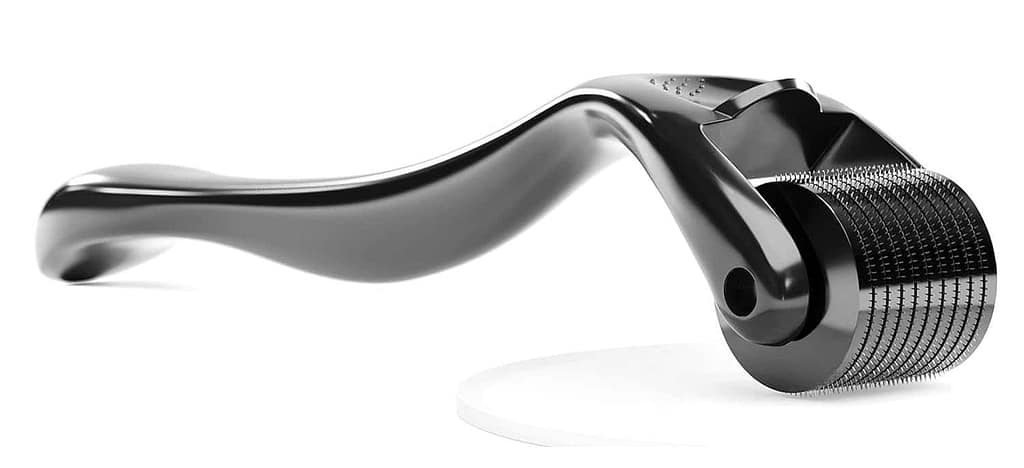
A derma roller (also called a microneedling roller) is a handheld device covered in dozens of tiny needles arranged around a cylindrical drum. When rolled across the scalp, these needles create hundreds of microscopic punctures in the skin — small enough to cause no lasting damage, but large enough to trigger the skin’s natural wound-healing response.
That wound-healing response is the key mechanism behind its effectiveness for hair growth. The body responds to the micro-injuries by releasing growth factors, increasing blood flow, and stimulating collagen production — all of which benefit hair follicles.
Derma rollers used for scalp treatment typically have needle lengths between 0.25mm and 1.5mm. The correct length depends on your goal — we cover this in detail in the needle size section below.
🔬 Derma Roller vs. Derma Stamp
You may also see “derma stamps” marketed for hair growth. A derma stamp uses a flat head that you press vertically into the scalp rather than rolling. For scalp use, many dermatologists prefer stamps as they reduce lateral tearing of tissue. Both work — stamps are slightly more precise for targeted areas, rollers cover more ground faster. This guide focuses on rollers as they are more widely available and better studied for hair loss.
Does Derma Rolling Actually Work for Hair Growth? (The Research)
The clinical evidence is genuinely strong — with one important qualification we’ll get to.
The landmark study was published in the International Journal of Trichology in 2013. Researchers compared two groups of men with androgenetic alopecia: one group used minoxidil alone, the other used minoxidil combined with weekly derma rolling using a 1.5mm roller. After 12 weeks, the results were dramatic:
📊 12-Week Hair Count Results (2013 Clinical Study)
91.4 new hairs
22.2 new hairs
Mean hair count per cm² after 12 weeks. Source: International Journal of Trichology, 2013.
That’s over 4× the hair regrowth from adding a $15–30 tool. A 2021 systematic review in the Journal of Cosmetic Dermatology analysed multiple studies and concluded that microneedling is a safe and effective treatment for androgenetic alopecia, particularly when used alongside topical treatments like minoxidil.
🧭 The caveat most articles skip
Almost every strong result in the literature comes from microneedling combined with a topical treatment. Studies of microneedling as a standalone therapy exist, but they are fewer, smaller and less consistent. If you buy a roller expecting it to regrow hair on its own, you are betting on the thinner half of the evidence. Used alongside minoxidil, you are on solid ground.
The proposed mechanisms are well-supported:
- Upregulation of growth factors — microneedling activates Wnt/β-catenin signalling, a pathway that stimulates hair follicle stem cells
- Enhanced drug absorption — the microchannels created by derma rolling allow topical treatments like minoxidil to penetrate deeper into the scalp
- Increased blood flow — improved vascularisation delivers more oxygen and nutrients to follicles
- Collagen induction — thickens the dermal layer around follicles, anchoring thinning hair
⚠️ Important: Evidence Is Strongest for Androgenetic Alopecia
Most studies on derma rolling for hair loss focus on androgenetic alopecia (pattern hair loss). Evidence for other types — such as alopecia areata, telogen effluvium, or traction alopecia — is more limited. If your hair loss has a different cause, consult a dermatologist before starting microneedling.
Which Needle Size Should You Use?
Needle size is the most important variable and the most commonly misunderstood. Using the wrong size either reduces effectiveness or causes unnecessary irritation.
🔬 How Deep Each Needle Size Penetrates
Longer needles = deeper penetration = stronger response, but longer recovery time between sessions.
| Needle Size | Best For | Frequency | Pain Level |
|---|---|---|---|
| 0.25mm | Enhancing absorption of topical products (minoxidil, serums) | Daily or every other day | None |
| 0.5mm | General hair growth stimulation + product absorption | 2–3 times per week | Mild |
| 1.0mm | Stronger collagen stimulation and growth factor activation | Once per week | Moderate |
| 1.5mm | Maximum stimulation — used in the landmark clinical studies | Once per week or less | Moderate–High |
The practical recommendation for most people: Start with a 0.5mm roller used 2–3 times per week. This gives you meaningful hair growth stimulation without the recovery time required by longer needles. If you want to replicate the clinical study protocol most closely, use a 1.5mm roller once per week — but expect 24–48 hours of scalp redness and sensitivity after each session.
Do not use needles longer than 1.5mm on the scalp at home. Anything beyond this carries a real risk of scarring and should only be performed by a professional.
How to Use a Derma Roller for Hair Growth: Step-by-Step
Technique matters. Rolling incorrectly can irritate the scalp without delivering the stimulus needed to activate follicle growth factors.
Before You Start
Wash your scalp thoroughly with a gentle shampoo and dry completely — derma rolling on a dirty scalp pushes bacteria into the microchannels
Sterilise your derma roller by soaking it in 70% isopropyl alcohol for 5–10 minutes, then let it air dry
Part your hair to expose the target area clearly before you begin rolling
The Rolling Technique
Apply light pressure — enough to feel the needles, not enough to cause significant pain
Roll in three directions over each area: horizontally, vertically, and diagonally — this ensures uniform stimulation of the scalp
Make 4–6 passes in each direction over each section
Work systematically across the thinning area — don’t roll the same spot repeatedly without moving on
The entire session should take 5–10 minutes
After Rolling
- If using minoxidil: apply it immediately after derma rolling for maximum absorption through the open microchannels
- Avoid washing your scalp for at least 4 hours after rolling
- Avoid direct sun exposure on the scalp for 24 hours
- Some redness and tingling is normal — it’s the inflammatory response that drives the benefits
- Clean and sterilise the roller immediately after each use, store in its case
🚫 Minoxidil yes — cosmetic serums no
The “apply immediately after” advice above is specific to minoxidil, a regulated drug product studied alongside microneedling.
It does not extend to cosmetic scalp serums. Those aren’t sterile, and many contain fragrance allergens, essential oils, preservatives and penetration enhancers — ingredients that are fine on intact skin but a meaningful sensitisation risk introduced into fresh micro-channels. If you use a scalp serum too, leave a clear gap before applying it and favour fragrance-free formulations. How long a gap depends on needle depth and how your skin responds, so check your device’s guidance rather than working to a fixed number. We compared six scalp serums here, including which are fragrance-free.
🚫 STOP — Do Not Use a Derma Roller If:
- You have active scalp inflammation, psoriasis, eczema, or open wounds on the scalp
- You have a history of keloid scarring
- You are on blood thinners or have a bleeding disorder
- You have an active scalp infection
- The scalp area shows significant inflammation — treat the inflammation first
Best Derma Rollers for Hair Growth on Amazon (2026)
| Product | Badge | Needle Size | Needle Count | Price | Buy |
|---|---|---|---|---|---|
| Sdara Titanium Derma Roller | ⭐ Best Overall | 0.5mm | 540 | $ | View Price → |
| ROSELYNBOUTIQUE Derma Roller | 🌱 Best for Beginners | 0.25mm | 540 | $ | View Price → |
| Koi Beauty Microneedle Roller | 🔬 Best Build Quality | 0.5mm | Individual pins | $$ | View Price → |
| FolliRoll Derma Roller | 🎯 Best for Targeted Use | 1.0mm | 192 | $$ | View Price → |
1. Sdara Titanium Derma Roller ⭐ Best Overall
Best for: Most users — anyone combining derma rolling with minoxidil
Needle size: 0.5mm | Needle count: 540 titanium needles
Amazon rating: 4.4/5 (10,000+ reviews)
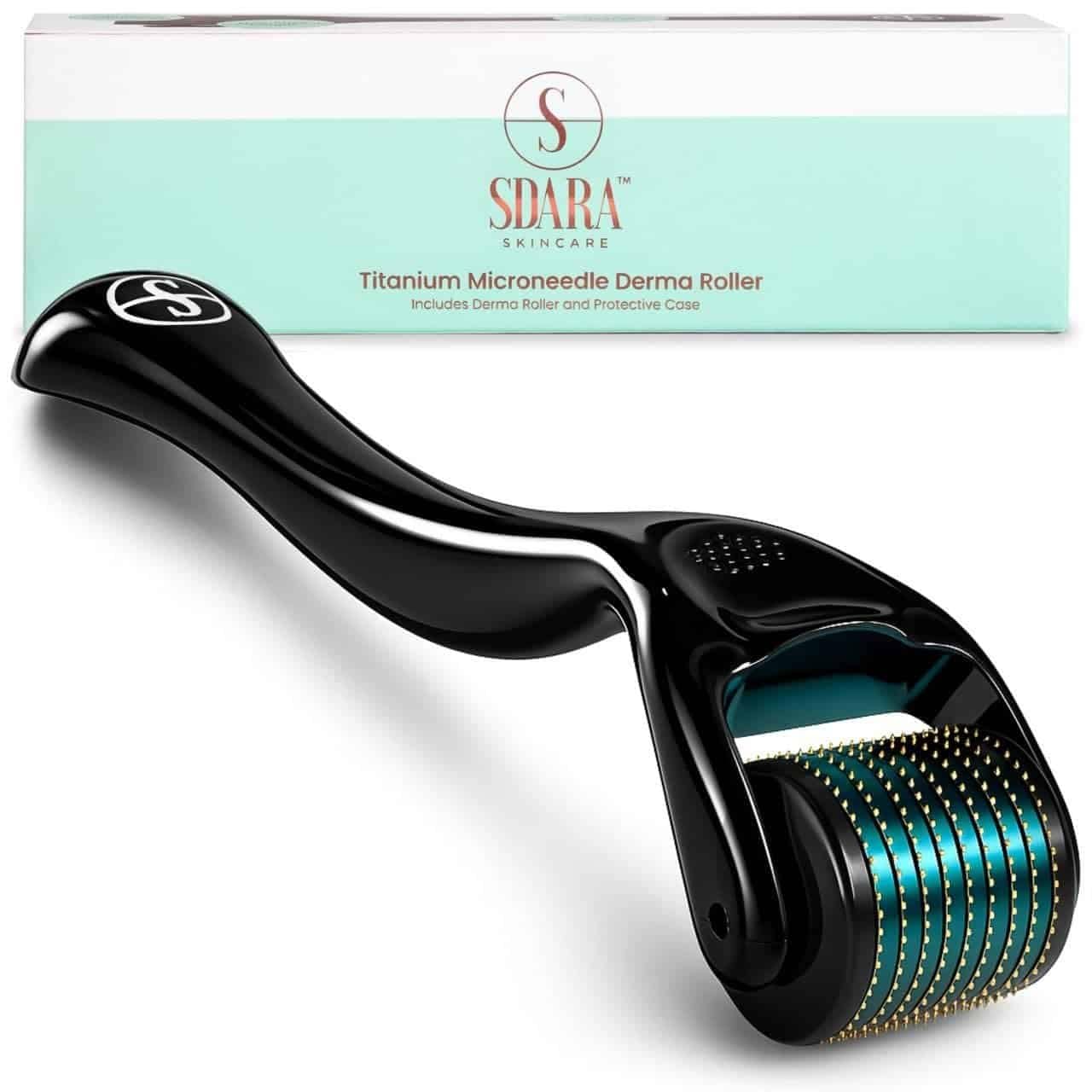
The Sdara is the most consistently recommended derma roller across dermatology communities for at-home scalp use. The 540-needle titanium head provides even, uniform coverage with minimal drag. Titanium needles hold their sharpness significantly longer than stainless steel — important because dull needles tear rather than puncture, causing irritation without the growth-stimulating benefit.
The 0.5mm length is the sweet spot for most users: deep enough to stimulate growth factors and enhance minoxidil absorption, gentle enough to use 2–3 times per week without significant recovery time. With 10,000+ Amazon reviews, it’s the most validated option on this list.
✅ Pros
- 540 titanium needles — long-lasting sharpness
- 10,000+ verified Amazon reviews
- Excellent full-scalp coverage
- Protective case included
- Available in 0.25mm and 0.5mm
❌ Cons
- Replace every 3–4 months with regular use
- 0.5mm requires 48hr gap between sessions
🛒 View Today’s Price on Amazon →
2. ROSELYNBOUTIQUE Derma Roller 🌱 Best for Beginners
Best for: Anyone new to derma rolling, or daily users wanting to enhance topical absorption
Needle size: 0.25mm | Needle count: 540 titanium needles
Amazon rating: 4.4/5
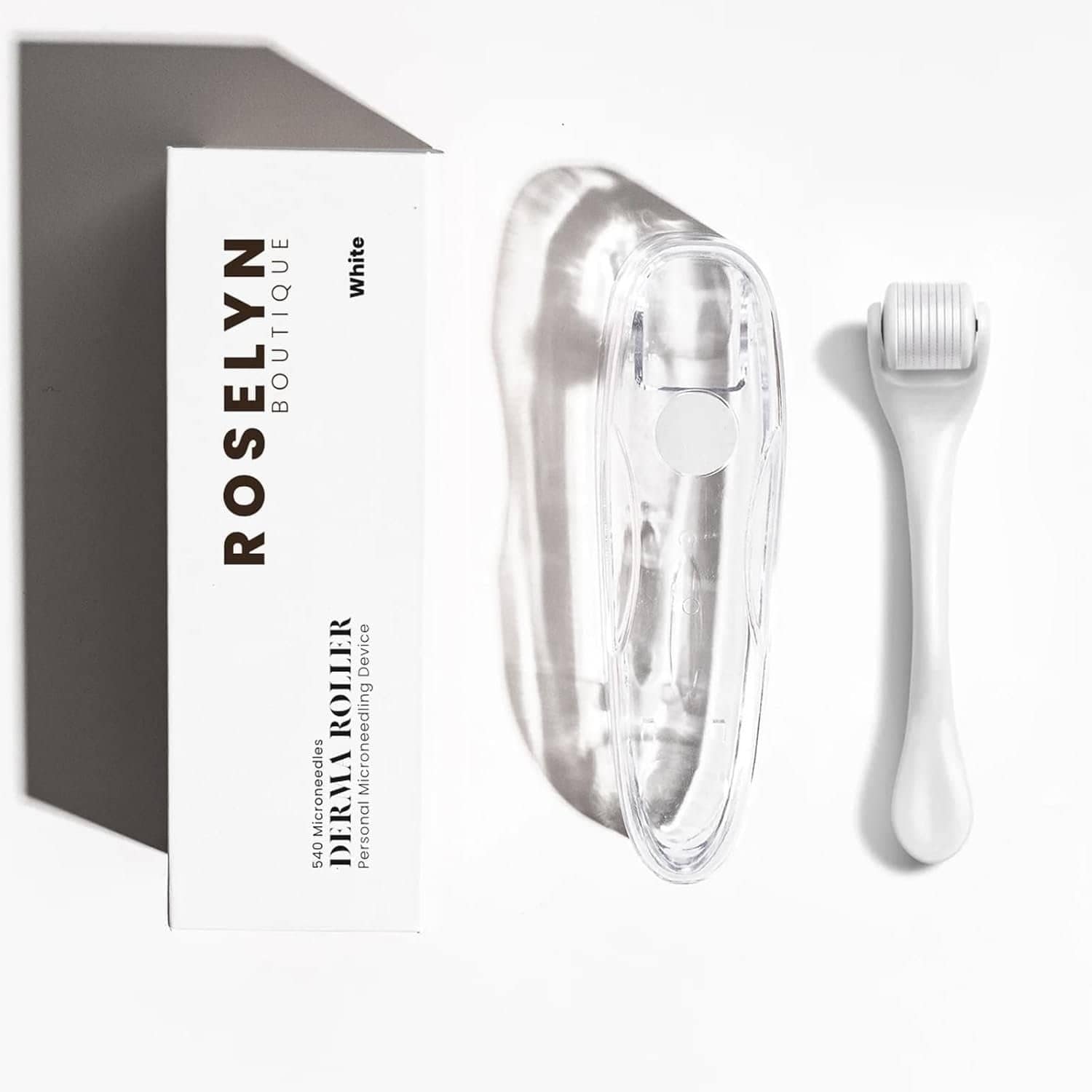
ROSELYNBOUTIQUE’s 0.25mm roller is one of the most widely recommended beginner options across dermatology and hair loss forums. The 0.25mm needle depth is gentle enough for daily use on sensitive scalps, making it a sensible entry point for anyone new to microneedling, or for improving minoxidil absorption on non-deep-stimulation days.
It’s suitable for both men and women, works across scalp, face and beard, and is ergonomically designed for easy home use. A reasonable starting point before progressing to a 0.5mm roller.
✅ Pros
- Safe for daily use — zero downtime
- Good for improving topical absorption
- 540 durable titanium needles
- Suitable for sensitive scalps
- Ergonomic, easy to handle
❌ Cons
- 0.25mm too shallow for deep growth factor stimulation
- Best used alongside a deeper roller for a full protocol
🛒 View Today’s Price on Amazon →
3. Koi Beauty Microneedle Roller 🔬 Best Build Quality
Best for: Users who want individual precision pins over mass-needle design
Needle size: 0.5mm | Needle type: Individual real titanium pins
Amazon rating: 4.5/5
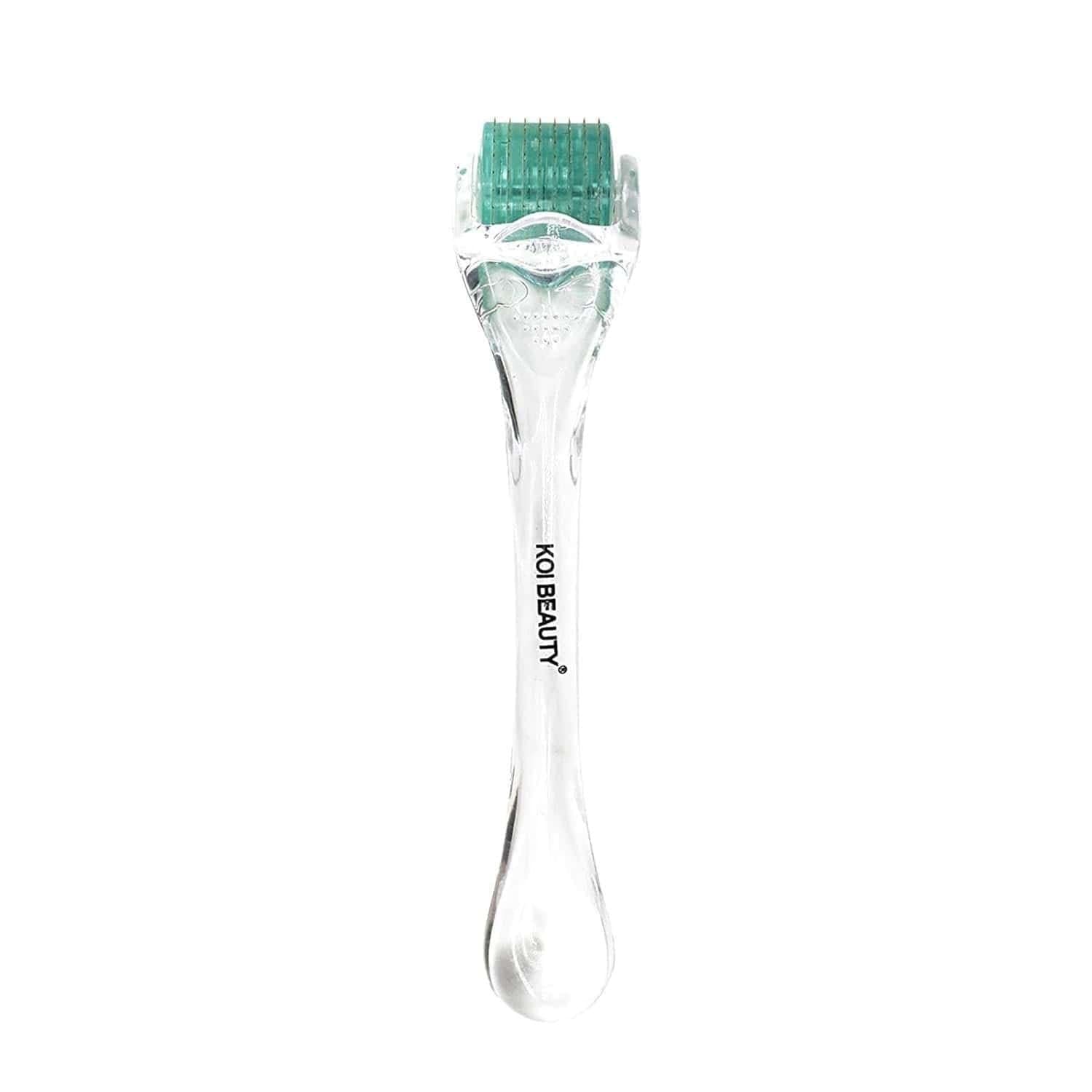
Koi Beauty stands out because it uses individual real titanium pins rather than the moulded needle drums used by most budget rollers. Individual pins give more consistent depth than mass-produced drums, where needles can bend or splay unevenly over time — a common failure mode in cheap rollers that users rarely notice until irritation increases.
At 0.5mm, it hits a sensible depth for both growth factor stimulation and enhanced topical absorption. The ergonomic handle and included storage case make it practical for long-term regular use. Slightly higher price than the Sdara, but the engineering justifies it if you intend to keep this up for months.
✅ Pros
- Individual titanium pins — no bending or uneven depth
- Better build quality than budget rollers
- Ergonomic handle for scalp use
- Storage case included
- More consistent penetration depth
❌ Cons
- Higher price than entry-level options
- Fewer total pins than 540-needle rollers
🛒 View Today’s Price on Amazon →
4. FolliRoll Derma Roller 🎯 Best for Targeted Use
Best for: Targeted crown or hairline work, and users ready to step up from 0.5mm
Needle size: 1.0mm | Needle count: 192 individual titanium microneedles
Amazon rating: 4.3/5
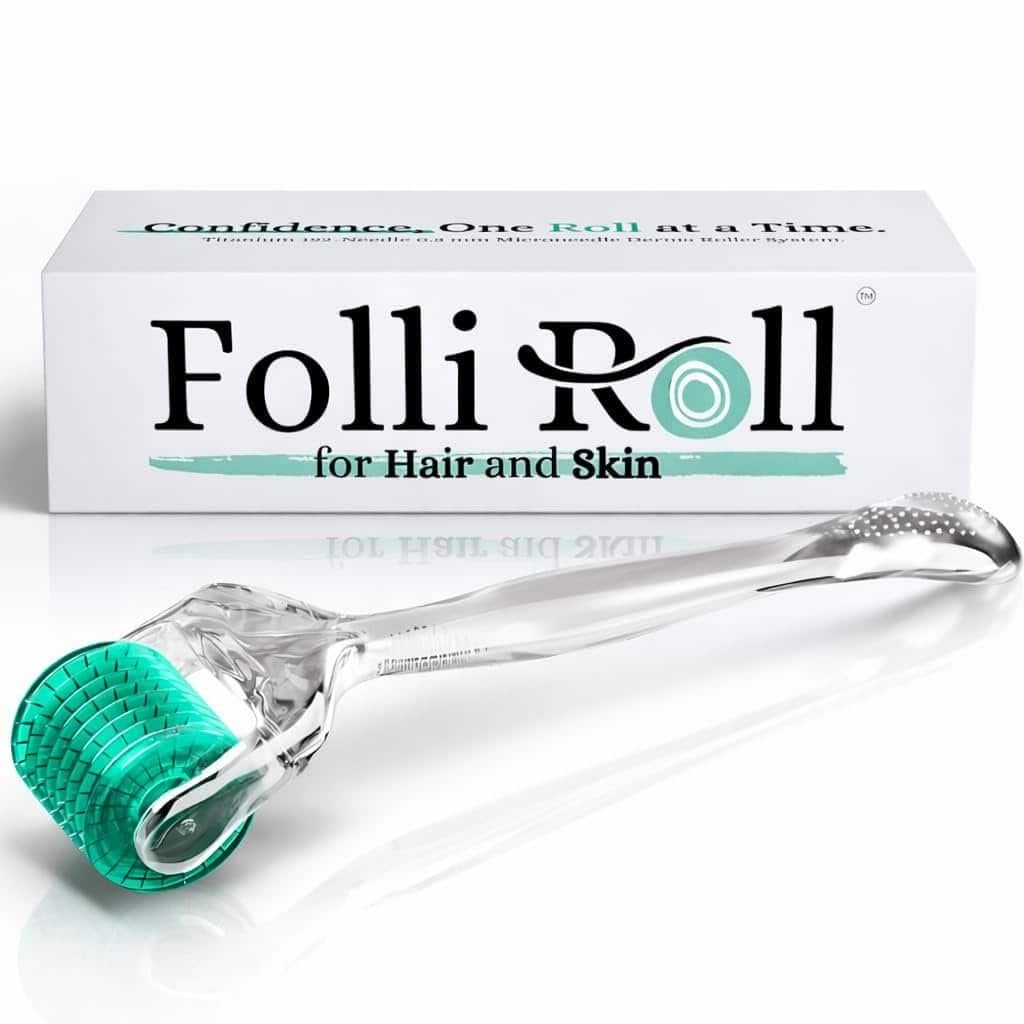
FolliRoll is designed specifically for scalp and hair use — unlike many rollers that are primarily face tools repurposed for the scalp. The 192 individual titanium microneedles at 1.0mm provide meaningful deep stimulation of hair follicle stem cells, triggering the collagen induction and growth factor response associated with regrowth.
The 1.0mm length sits between the gentle 0.5mm and the intensive 1.5mm clinical protocol — strong enough for weekly deep stimulation, manageable enough that recovery is typically under 24 hours. Comes with a free storage case and is designed for both men and women. A reasonable progression once you’ve established your routine.
✅ Pros
- Designed specifically for hair and scalp
- 1.0mm — strong follicle stimulation
- Individual titanium microneedles
- Precision for targeted thinning areas
- Free storage case included
❌ Cons
- Weekly use only — not for daily rolling
- 192 pins = slower coverage of large areas
- Not ideal for beginners
🛒 View Today’s Price on Amazon →
How to Combine Derma Rolling with Minoxidil
This combination is where derma rolling becomes genuinely powerful. The 2013 clinical study found that combining derma rolling with minoxidil produced over 4× the hair regrowth of minoxidil alone. The mechanism is straightforward: the microchannels created by derma rolling allow minoxidil to penetrate deeper into the scalp than it can on intact skin.
Here’s the correct protocol depending on your needle size:
With 0.25mm or 0.5mm (Daily or Every Other Day)
- Derma roll first, then apply minoxidil immediately after
- The shallow channels are temporary — absorption window is 15–30 minutes
- This is the most practical routine for daily minoxidil users
With 1.0mm or 1.5mm (Weekly)
- On non-rolling days, continue your normal minoxidil routine as usual
- Wait 24 hours after a 1.0mm session before applying minoxidil
🚫 STOP — Critical Warning for 1.5mm Users
Do not apply minoxidil on the same day as a 1.5mm session. The deep channels significantly increase minoxidil absorption — applying it the same day risks systemic absorption causing headaches, palpitations, or dizziness. Wait 24–48 hours after a 1.5mm session before resuming minoxidil.
💡 What We’d Actually Do
For most people, the optimal starting protocol is: 0.5mm roller 2–3× per week + minoxidil applied immediately after each session + minoxidil on non-rolling days as normal. This is practical, well-tolerated, and closely aligned with the evidence base. If you’re not yet using minoxidil, consider pairing microneedling with a quality hair growth supplement like Nutrafol or Viviscal while you decide on topical treatment — but be aware that the combination evidence is built on topicals, not supplements.
What to Try Next: Light Therapy and Topicals
Microneedling works mechanically — it creates the injury response and the channels. Two other approaches work on the same follicles by different routes, and readers researching one usually end up researching the others.
Low-level laser therapy
Where microneedling stimulates the follicle by controlled injury, low-level laser therapy uses specific wavelengths of red light — typically 620–680nm — to act on cellular activity in the scalp. Different mechanism, same target.
The evidence is modest but real, the devices are FDA cleared rather than approved, and the caveats matter as much as the claims. Our evidence review covers what the independent research shows, including why several widely quoted efficacy figures come from studies funded by the companies selling the devices.
Topical serums
If you’re microneedling partly to improve absorption, the obvious question is what you’re absorbing. We pulled the full ingredient lists for six scalp serums from $24 to $125 and found that price predicts very little about what’s actually in the bottle — and that three of the six contain fragrance allergens you may not want on a freshly treated scalp. The comparison is here.
Side Effects and When to Stop
Derma rolling is safe when done correctly, but there are side effects to be aware of:
- Redness and tingling — normal for 2–24 hours after rolling. This is the inflammatory response that drives the benefits
- Mild bleeding — occasional with 1.0mm+ needles on sensitive areas. Minor and resolves quickly
- Scalp sensitivity — common in the first few weeks. Reduce frequency if significant
- Folliculitis — can occur if the roller is not properly sterilised or if rolling on a dirty scalp. Hygiene is non-negotiable
Stop rolling and consult a dermatologist if you experience: persistent scalp inflammation lasting more than 48 hours, significant pain, signs of infection (pus, swelling, warmth), or unusual hair shedding beyond the first 2–3 weeks.
A note on shedding: some users experience a temporary increase in hair shedding in the first 2–4 weeks of derma rolling. This is analogous to the initial shedding seen with minoxidil — it reflects follicles transitioning phases and typically resolves within 4–6 weeks.
Frequently Asked Questions
How long does it take to see results from derma rolling for hair growth?
Most studies report measurable hair count improvement after 8–12 weeks of consistent use. Visible results typically become apparent at 3–6 months. Derma rolling requires consistent long-term use — it is not a quick fix.
How often should I replace my derma roller?
Every 3–4 months with regular use, or sooner if needles drag or cause unusual irritation. Blunt needles tear rather than puncture, reducing effectiveness and increasing scarring risk. Never share a derma roller.
Can I use a derma roller if I’m also taking finasteride or dutasteride?
Yes — derma rolling is safe to combine with oral DHT blockers. This combination (oral DHT blocker + topical minoxidil + weekly microneedling) is one of the most evidence-backed protocols for androgenetic alopecia.
Is a derma roller or a derma stamp better for hair growth?
Both work. A derma stamp is better for precise, targeted areas and causes less lateral tearing. A roller covers larger areas more quickly. For diffuse thinning, a roller is more practical. For targeted crown or hairline work, a stamp may give slightly better results.
Can women use a derma roller for hair growth?
Yes. The research supports derma rolling for androgenetic alopecia in both men and women. Women with female pattern hair loss (diffuse thinning on the top and crown) have shown positive results in studies. The same needle size guidelines and technique apply.
Do I need to use minoxidil with a derma roller, or can I use it alone?
You can use it alone, but be clear about what the evidence supports. The strong results in the literature come from microneedling combined with a topical treatment. Standalone microneedling has a plausible mechanism and some supporting data, but the evidence base is thinner and less consistent. If you’re not using minoxidil, pairing microneedling with a quality oral supplement like Nutrafol is a reasonable alternative — just don’t expect it to match the combination results from the 2013 study.
Can I apply a scalp serum straight after rolling?
Not immediately. Cosmetic scalp serums aren’t sterile and often contain fragrance, essential oils and preservatives that are fine on intact skin but a sensitisation risk in fresh micro-channels. Minoxidil is a different case — it’s a regulated drug product studied in this context. For cosmetic serums, leave a gap and favour fragrance-free formulations. We compared six here.
The Bottom Line
Derma rolling is one of the most underrated tools in hair loss treatment. The clinical evidence is strong, the cost is low, and the risk is minimal when done correctly. For anyone already using minoxidil, adding a regular derma rolling session is one of the simplest ways to meaningfully boost your results without adding another expensive product to your routine.
Start with a 0.5mm titanium roller (Sdara or Koi Beauty) used 2–3 times per week, apply minoxidil immediately after each session, and give it a consistent 12 weeks before evaluating. The compound effect of both treatments working together is well-documented — and the investment is under $30.
Questions about derma rolling for hair growth? Leave a comment below — we read and respond to every one.
Related reads:
→ Laser Caps for Hair Growth: Do They Actually Work? (2026 Evidence Review)
→ $24 vs $125: What Do Premium Scalp Serums Actually Contain?
→ Minoxidil vs. Natural Supplements for Hair Growth: Which Works Better in 2026?
→ Top 5 Hair Growth Supplements on Amazon That Actually Work (2026)
Medical Disclaimer: Thrive Wellness Labs provides health and wellness information for educational purposes only. It is not a substitute for professional medical advice, diagnosis, or treatment. Always seek the advice of your physician or other qualified health provider with any questions you may have regarding a medical condition, supplement, or treatment device.
FDA Disclosure: These statements have not been evaluated by the Food and Drug Administration. The products reviewed on this site are not intended to diagnose, treat, cure, or prevent any disease.